Finger (S)
Our fingers are essential for doing practically everything in our daily lives, from writing to gripping things firmly. That’s why, when a tendon, joint, or nerve starts to fail—even if it’s just a minor discomfort—you notice it right away: it hurts, it gets stiff, and it makes life difficult. Since our hands are so delicate and complex, any problem with our fingers requires a thorough examination and expert care to ensure you make a full recovery and don’t lose mobility.
Below are the most common cases we treat at our practice.
Hand Surgeon
Trigger Finger
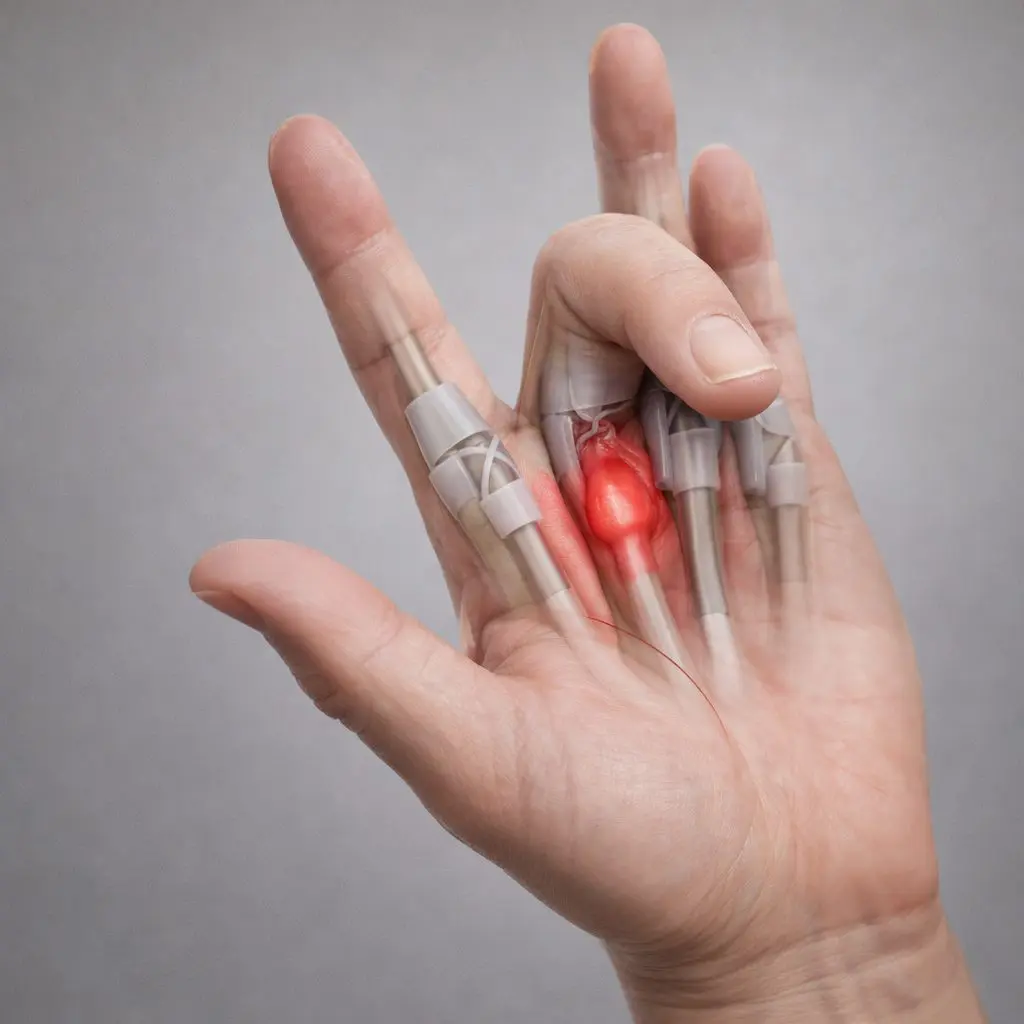
Do you feel like when you try to straighten a finger, it gets “stuck” or jammed, and then snaps back suddenly, as if you were pulling a trigger? This is commonly known as trigger finger (or stenosing tenosynovitis).
This happens because the tendon that helps you bend your finger becomes inflamed and thickens, or the “tunnel” (pulley) through which it runs becomes too narrow. Since it can’t slide smoothly, the finger gets stuck, causing an annoying clicking sound and pain when you try to move it, especially in the morning.
How can this be resolved?
The good news is that there is an effective solution:
Simple treatments first: In the early stages, we can treat it with rest, splints, anti-inflammatory medications, or local injections to reduce swelling.
Minimally invasive procedure: If the problem persists or the tendon constantly gets stuck, a minor outpatient procedure (with a very quick recovery) clears the tunnel so the tendon can glide again without any pain or jamming.
When is it time to see a specialist?
If you notice any of these symptoms in your fingers, it's important to get evaluated promptly to avoid long-term complications:
Constant twitching or snapping in one or more fingers.
Palpable nodules or “lumps” at the base of the fingers or on the palm of the hand.
Pain or stiffness upon waking that improves slightly throughout the day.
Difficulty or loss of strength when holding everyday objects.
Swelling and tenderness when pressing on the finger joint.
Hand Surgeon
Hammer Toe: When the Tip of Your Toe Won't Straighten Out
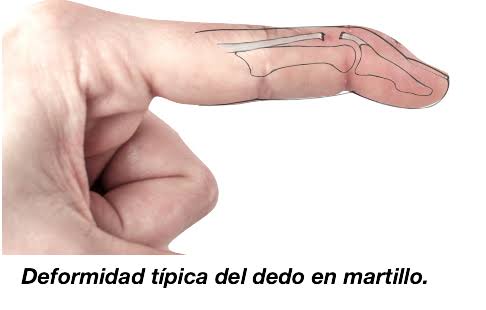
Did you hit the tip of your finger hard—perhaps while playing with a ball, making your bed, or tripping over something—and ever since then, has the last joint remained bent downward and unable to straighten? That is exactly what a hammer toe is.
It occurs when the tendon responsible for extending the fingertip is overstretched, torn, or detached along with a small piece of bone. Although it may not be very painful at first, the fingertip remains “drooping,” and it is impossible to lift it on your own.
How do we handle it?
Most cases have an excellent prognosis if treated early:
Splint Treatment (Without Surgery): If you seek treatment early, surgery is not required in the vast majority of cases. A special splint is applied to keep the tip of the finger completely straight for a few weeks so that the tendon or bone can heal on its own.
Surgical Solution: If the injury caused a large bone fragment to become dislodged, if the problem has persisted for a long time, or if the splint was not sufficient, we perform a minor corrective surgery to reattach the tendon or stabilize the bone, restoring its natural shape and function.
Where does it hurt?
Treatments and Solutions with Dr. Jorge Luis Díaz Gutiérrez: