Thumb
The thumb plays a key role in our hands: it gives us the strength to grasp objects and the precision that sets us apart. Because it is used so much and moves so frequently, it is very common for it to suffer injuries, instability, arthritis, or pain from overuse. That is why it is crucial not to ignore even the mildest discomfort, since a timely and accurate diagnosis prevents the problem from becoming much more troublesome.
Hand Surgeon
De Quervain's Tenosynovitis: Pain at the Base of the Thumb
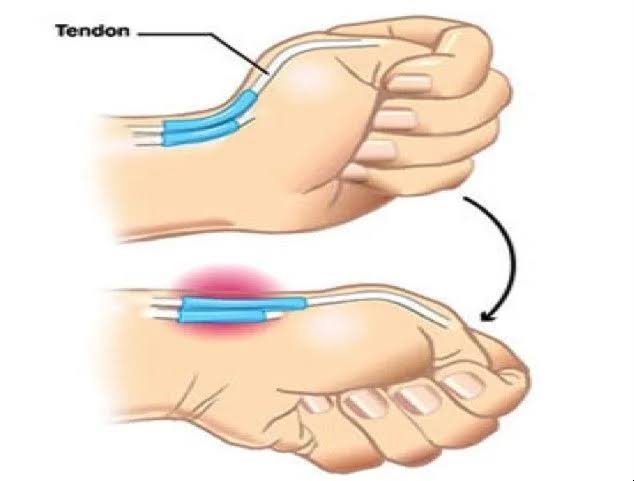
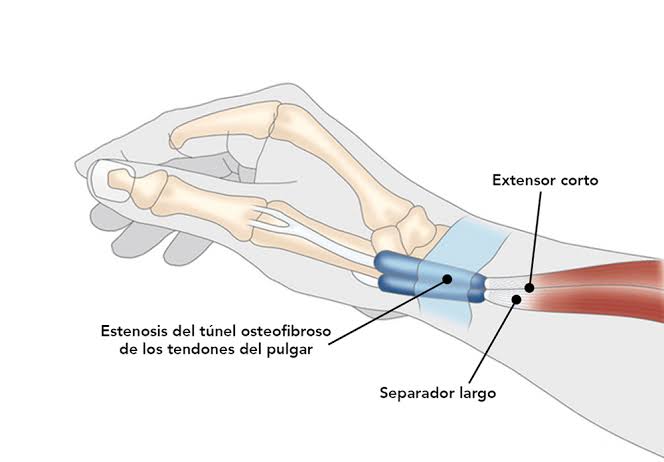
Do you feel a sharp pain or a “pinch” on the side of your wrist, right at the base of your thumb, when you try to make a fist, turn a knob, or lift something heavy? It’s very likely that you have De Quervain’s tenosynovitis.
This condition occurs when the tendons that control thumb movement (and the sheath through which they glide) become inflamed due to overuse or repetitive wrist movements. It is very common among parents of young children (due to the posture used when holding them), people who spend a lot of time working on a computer or cell phone, and those who play racquet sports or engage in strenuous crafts.
How can this be resolved?
It is entirely possible to regain comfort when moving your hand:
Conservative Treatment: In the early stages, the use of a special splint to immobilize the thumb, rest, anti-inflammatory medications, and local injections help reduce inflammation quickly and effectively.
Tendon Release Surgery: If the discomfort persists or limits your daily activities, a minimally invasive outpatient procedure is performed to slightly widen the space through which the tendons pass, allowing them to glide freely and painlessly once again.
Hand Surgeon
Thumb Tendon Injuries: When You Lose Strength and Control
The thumb does nearly half the work of the hand: we use it to pinch, grasp, write, and open all kinds of things. When there is a deep cut on the hand, a severe trauma, or a sudden strain, the tendons that allow the thumb to move up, down, or outward can be injured or completely torn (as in the well-known “skier’s thumb”).
If you notice that you suddenly can't move your thumb, things are falling out of your hands, or you feel a complete loss of strength when trying to make a pincer grip, it's very likely that you have a tendon injury that requires immediate specialized care.
How is it treated?
Unlike other inflammatory conditions, structural injuries or tendon tears require a precise approach:
Early Surgical Repair: Since this involves a torn or severed tendon, the best way to restore movement is to repair it through specialized reconstructive surgery. The sooner treatment is provided, the better and more natural the functional outcomes will be.
Guided Rehabilitation: After surgery, a personalized physical therapy program is essential to ensure that the tendon heals strong, regains its elasticity, and prevents joint stiffness.
Where does it hurt?
Treatments and Solutions with Dr. Jorge Luis Díaz Gutiérrez: